Layers of Blockchain Explained
di LCX Team ·
Blockchain technology has revolutionized the storage and transfer of data. The innovation of this technology is one of the biggest breakthroughs of the 21st century, but due to the intricacy of the technology, some users are unaware of its underlying basic structure.
The blockchain is a decentralized and distributed ledger that enables secure, transparent, and unchangeable transactions. It operates via a network of computers that validate and record each transaction in a series of blocks that are encrypted and linked to form a chain. With the emergence of cryptocurrencies such as Bitcoin and Ethereum, this technology has gained popularity over the past few years.
However, blockchain technology is not limited to digital currencies alone. Multiple layers facilitate its functionality and efficacy. Businesses and investors who wish to utilize blockchain technology for operations or investments must have a thorough understanding of these strata.
Layered Structure of Blockchain Technology
Primarily, blockchain is composed of five layers: the hardware infrastructure layer, the data layer, the network layer, the consensus layer, and the application layer. Every layer has a distinct function. Together, these layers make the blockchain a comprehensive solution for everything from back-end data administration to front-end application development. Let’s take a deep dive into the layers of blockchain:
- Hardware layer: Blockchains are predicated on peer-to-peer sharing of data. This layer consists of the physical components that support the blockchain network, such as computers and servers. A node is a computer or network of computers that decrypts transactions, and a blockchain is the sum of all nodes.
- Data layer: Following the hardware layer is the data layer, where transaction details are stored. The transaction information recorded on a block (the basic unit of a blockchain) includes information about the sent crypto, the public key of the recipient, and the private key of the sender. Each data-containing block is connected to the block that came before it and the block that will be generated next. Only the first block of the network, the genesis block, is connected forwards and not backwards.
- Network layer: This layer handles the communication between blockchain nodes. It connects nodes, propagates transactions, and distributes data throughout the network. Since blockchain is an open system, each node must be aware of the transactions being validated by other nodes. The network layer facilitates this communication.
- Consensus layer: This layer guarantees that all nodes in the network concur on the validity of each transaction. It uses a consensus mechanism, such as Proof of Work (PoW) or Proof of Stake (PoS), to validate and add transactions to the blockchain.
- Application layer: The Application layer in the blockchain is the one on which apps are built. This layer includes smart contracts, decentralized applications (dApps), and other software that run on top of the blockchain network. It allows developers to create new applications and services that leverage the security and transparency of the blockchain. These implementations may consist of anything, like wallets, social media Apps, browsers, Defi Apps, and NFT platforms, to name a few. While the UI/UX of the app is identical to that of any other standard application, the backend data storage of these applications is decentralized.
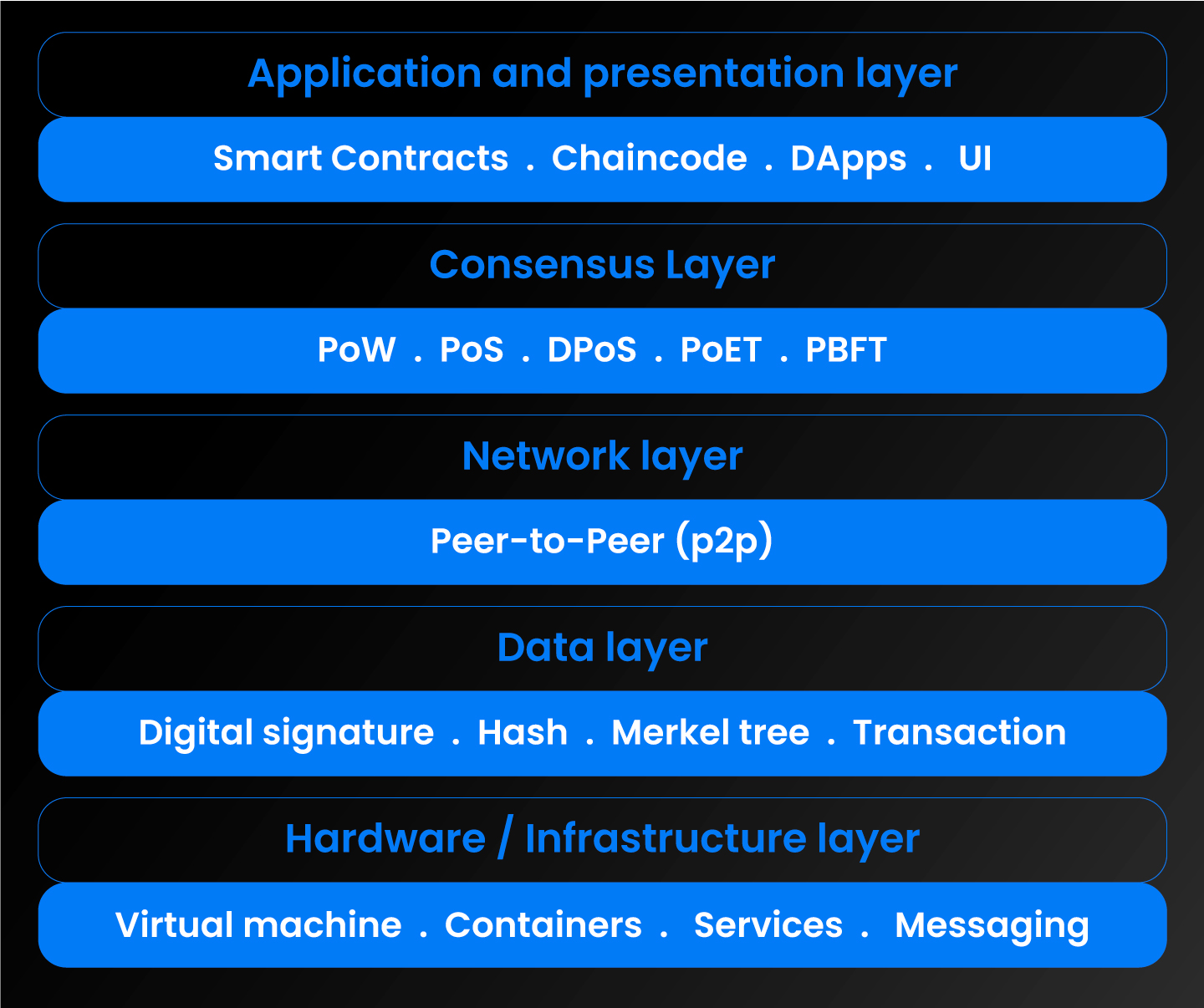
Each layer of the blockchain system is integral to assuring the security, transparency, and efficiency of transactions.
Layers of Blockchain
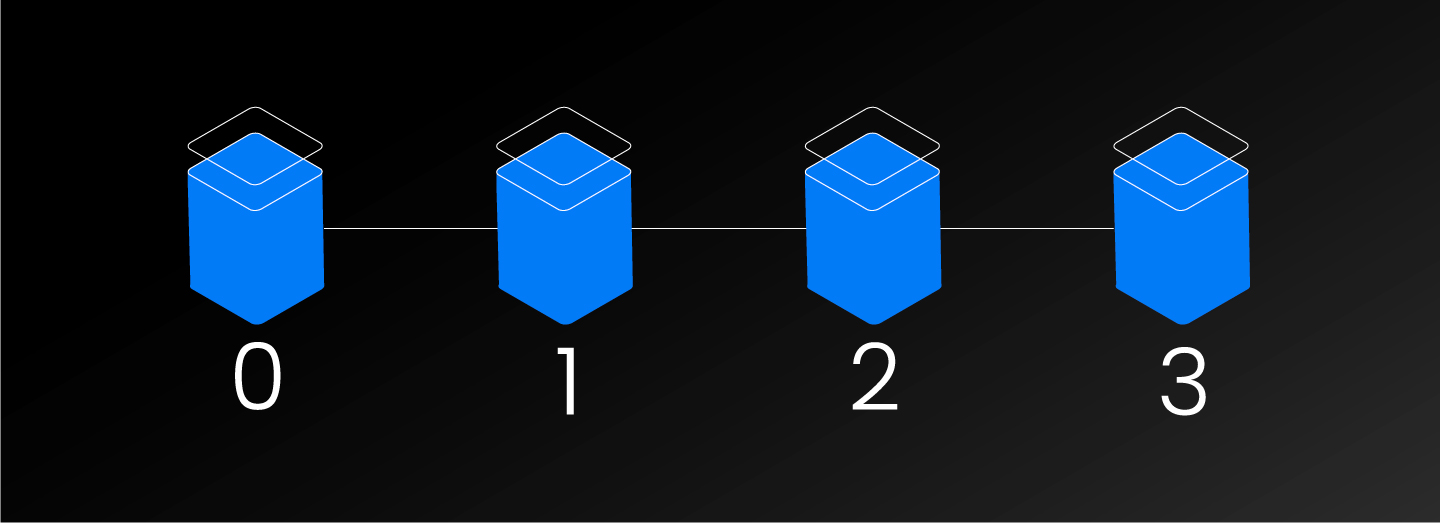
The layers of the blockchain are:
- Layer 0: The blockchain itself is referred to as layer zero. Internet, hardware, and a variety of other connections are required to implement blockchain technology. Layer zero blockchain is the initial stage of blockchain that enables Bitcoin, Ethereum, and other networks to function. Layer 0 also facilitates cross-chain interoperability communication from the top layer to various layers. Layer 0 provides the blockchain’s fundamental infrastructure, including the protocols and standards that govern the blockchain network.
- Layer 1: Layer 1 blockchain represents an improvement over layer 0. Under this layer, the blockchain network’s functionality is maintained. Scalability is however a limitation in the layer one blockchain. Any modifications to or problems with any new protocol at layer 0 will also affect layer 1. This layer is also known as an implementation layer. Layer one blockchains include Bitcoin, Ethereum, Cardano, and Ripple, among others.
- Layer 2: Layer 2 has eliminated numerous interactions from Layer 0. For specific blockchains, the scaling solution is layer 2 blockchain. It is compatible with third-party integration and eliminates layer 1’s restrictions. It is the most common method for resolving proliferation issues in POW networks. Various industries have recently begun to implement layer two technologies.
- Layer 3: Layer 3 is also known as the “application layer.” This layer’s primary responsibility is to host DAapps and numerous other protocols that facilitate other apps. In this section, the blockchain protocol is divided into two significant sub-layers, namely application, and execution. It is the most effective solution for separating blockchains with cross-chain capabilities in order to achieve the goal of genuine interoperability.
Differences Between Layers 0,1,2,3
| Layer 0 | This layer has the hardware, protocols, and other foundational elements. |
| Layer 1 | Maintains dispute resolution, consensus mechanism and programming of the blockchain. Examples: Bitcoin blockchain, Ethereum Blockchain |
| Layer 2 | Has better scaling capabilities than Layer 0 and 1. It has the capability to be integrated with third-party solutions. |
| Layer 3 | This layer is used to host dApps and other user-facing applications. |
Conclusion
Overall, the different layers of blockchain work together to create a powerful and transformative technology that has the potential to revolutionize various industries. By enabling secure, transparent, and efficient transactions without the need for intermediaries, blockchain has the potential to significantly reduce costs and increase transparency and trust in business processes. As more companies and organizations begin to adopt blockchain technology, we can expect to see even more innovative use cases and applications being developed, and a brighter future for the blockchain ecosystem.