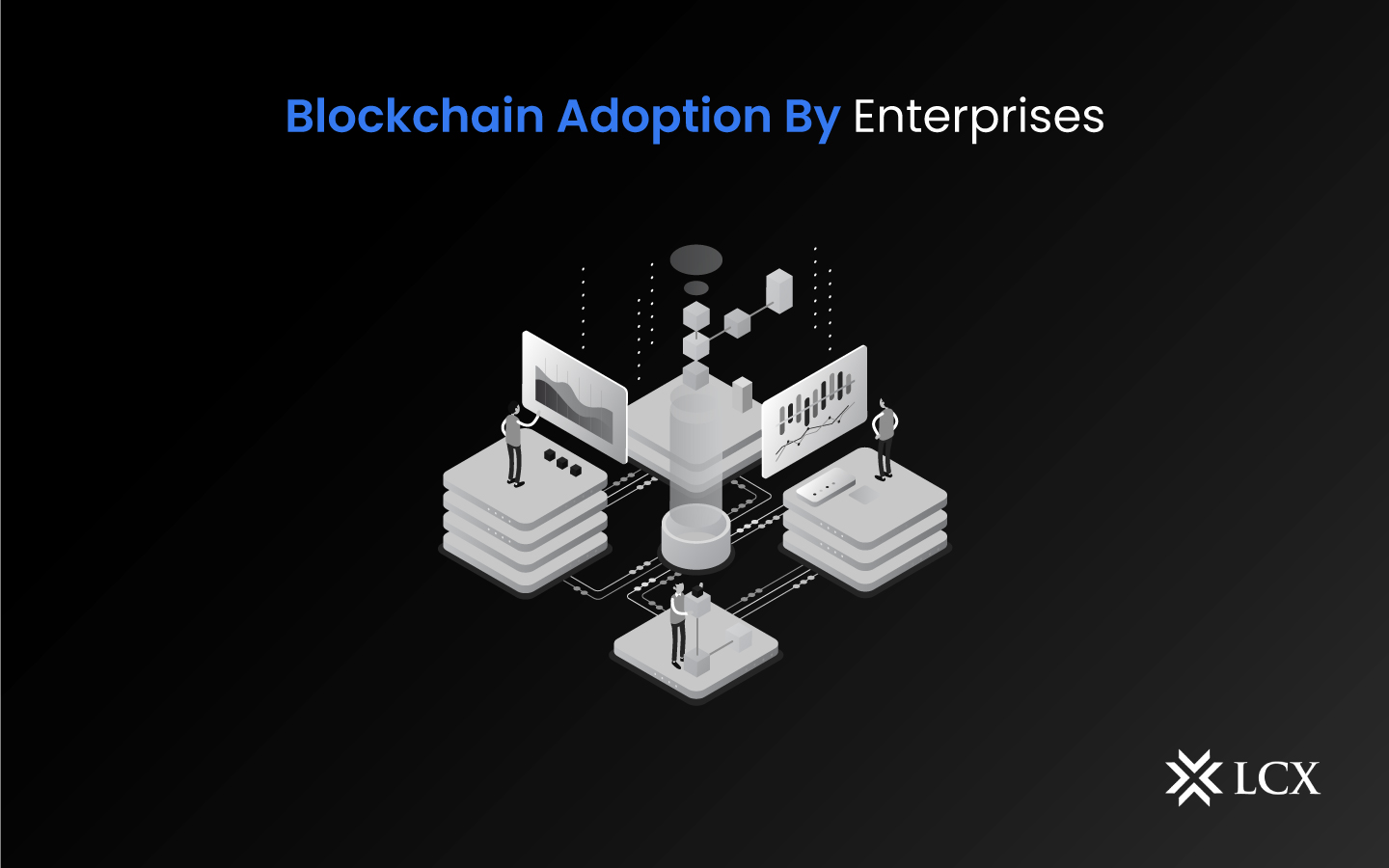
Blockchain Adoption by Enterprises
par LCX Team ·
Blockchain technology, the technology underlying cryptocurrencies, is gaining appeal among businesses in a variety of sectors. Blockchain’s capacity to record transactions in a safe and transparent manner has the potential to transform how businesses function.
Blockchain technology enables the creation of a secure, transparent, and immutable database. It is a decentralized network with a digital ledger that records transactions and other data. The data is kept in blocks that are connected in a sequential chain. The blocks are protected by cryptographic techniques, making it impossible to edit or remove any of the blockchain’s data.
Being the technological foundation for cryptocurrencies, blockchain has been at the forefront of the digital currency era’s turbulent ups and downs. Blockchain has yet to play a significant role in the majority of businesses, with only a few established experimental applications and lukewarm commercial enthusiasm. Adoption of blockchain technology is contingent upon identifying the most applicable use cases, developing a focused strategy, and motivating individuals.
What Are the Barriers to Blockchain Adoption by Enterprises?
Despite its benefits, which include increased trust and traceability, business blockchain deployments have lagged behind due to a number of technological, economic, and organizational obstacles. They are:
- On the technological level, obstacles include interoperability, the need to manage tradeoffs between scalability, security, the degree of decentralization, and the difficulty of tokenizing tangible assets.
- Concerns regarding the economy revolve around the quantification of revenues, benefits, and risks, as well as the necessity to cohabit with legacy systems, which can rapidly increase the cost of blockchain deployment.
Why Should Enterprises Adopt Blockchain Technology?
Adopting blockchain technology has a number of advantages for enterprises:
- Increased Security and Transparency: The capacity of blockchain technology to deliver greater security and transparency is one of the primary reasons why enterprises should adopt it. Blockchain technology employs cryptographic methods to protect the network’s stored data. Also, the data is stored in a decentralised fashion, making it nearly impossible for hackers to alter it. Moreover, the network’s transparency ensures that all parties engaged in a transaction may examine and verify the data stored on the blockchain.
- Reduced costs: The adoption of blockchain technology by enterprises will minimize expenses. Blockchain technology eliminates the need for intermediaries to verify transactions, such as banks or other financial institutions. This minimizes the transaction fees associated with conventional financial transactions like wire transfers and credit card payments. In addition, blockchain technology automates a number of operations, reducing the expenses associated with manual processes and human error.
- Faster transactions: Blockchain technology enables faster transactions than traditional financial transactions. This is because blockchain transactions are processed in real-time, and there is no need for intermediaries to verify the transactions. This results in faster settlement times and quicker access to funds.
- Improved traceability: Blockchain technology allows for improved traceability of transactions. This is because every transaction is recorded on the blockchain, and the data is immutable. This makes it easier to track the movement of goods and services, which is particularly important in supply chain management.
- Enhanced trust: Blockchain technology enables enhanced trust between the parties involved in a transaction. This is because the data stored on the blockchain is transparent, immutable, and secure. This enhances trust between the parties involved in a transaction, which is particularly important in industries such as finance, healthcare, and supply chain management.
Final Thoughts
Blockchain technology has the ability to transform how various enterprises function. Despite the delayed adoption of blockchain technology, more and more enterprises are beginning to recognize its potential benefits. With the maturation of the technology and the establishment of rules, we may anticipate more businesses embracing blockchain technology in the next few years.