What Is a Blockchain Oracle?
par LCX Team · · Updated August 12, 2025
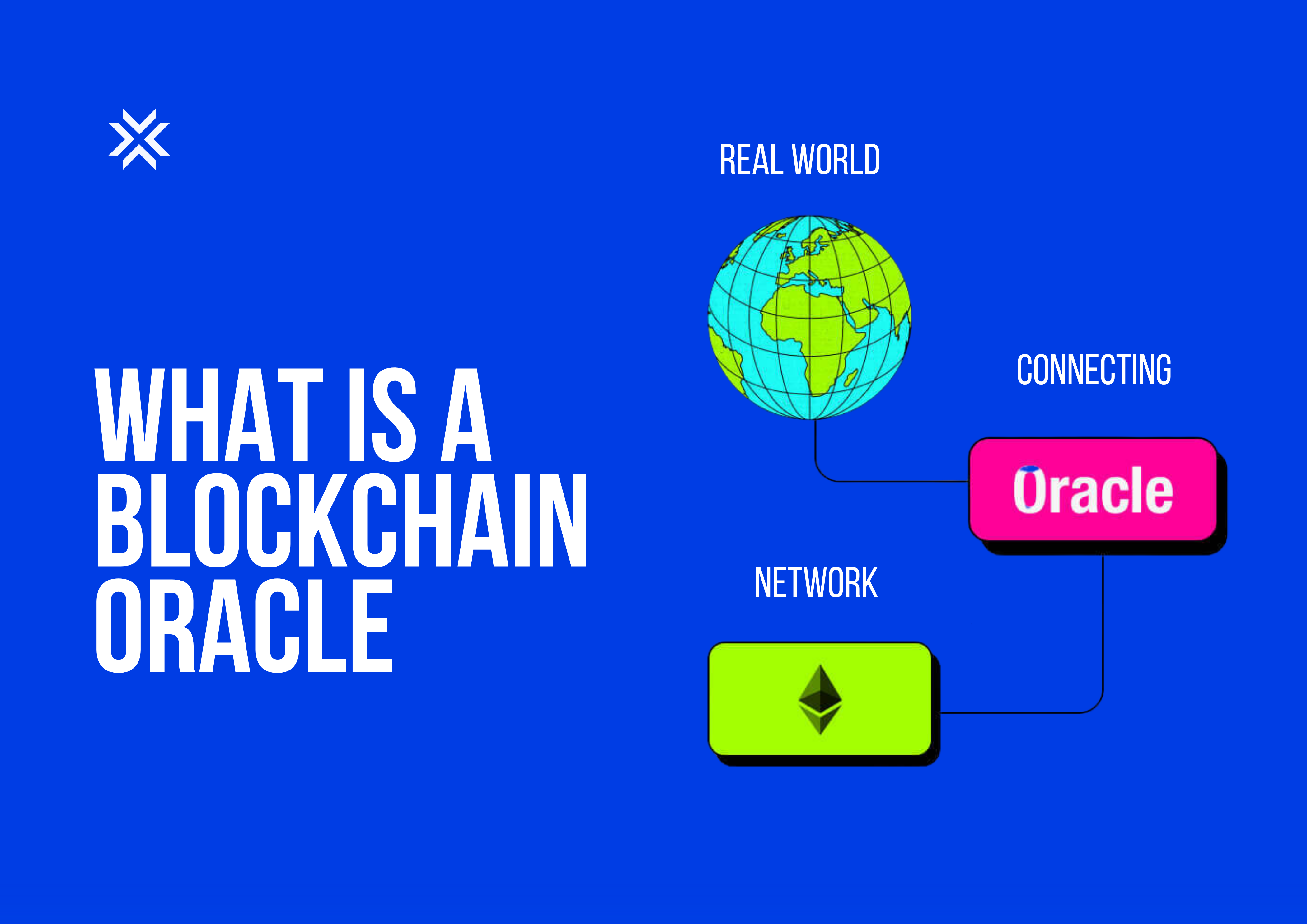
Blockchain oracles are entities that connect blockchains to external systems, allowing smart contracts to execute based on real-world inputs and outputs. They are crucial components in building what’s often referred to as the verifiable web. Oracles bridge isolated blockchains with off-chain data, external compute, and even other blockchains—enabling much-needed interoperability. While oracles aren’t the original data sources themselves, they function as the querying, verification, and authentication layer for delivering off-chain information to on-chain systems.
Understanding Blockchain Oracles
Smart contracts inherently lack the ability to access off‑chain data—a limitation rooted in blockchain’s deterministic architecture, which ensures consistent consensus across distributed nodes. Oracles eliminate this boundary by acting as trusted intermediaries. They fetch external data—such as price feeds, weather information, or transaction completions—and deliver them to smart contracts so that real‑world–based agreements can execute automatically.
How Blockchain Oracles Work
Oracles operate through a clear sequence:
- Smart contract emits a data request.
- Oracle nodes detect the request.
- Nodes fetch data from external sources (like web APIs, sensors, financial feeds).
- Data is aggregated and verified, sometimes involving multiple sources or nodes to ensure accuracy.
- Result is signed and delivered on-chain for the smart contract to consume and act upon.
This maintains consensus while enabling smart contracts to engage with real-time external data efficiently and securely.
Types of Blockchain Oracles
Oracles can be categorized by data source, direction of data flow, and trust structure:
- Software Oracles gather data from web sources, APIs, or databases.
- Hardware Oracles use physical devices—like sensors or scanners—to provide real-world data.
- Inbound Oracles bring off-chain data into smart contracts.
- Outbound Oracles relay on-chain data or triggers back to external systems.
- Cross-Chain Oracles enable interoperability by sharing data across different blockchains.
- Compute Oracles perform off-chain computations (e.g., random number generation) and deliver results on-chain.
- Human Oracles involve individuals supplying verified information manually.
- Trust models include centralized oracles (single provider) and decentralized oracle networks (multiple providers for redundancy and security).
The Oracle Problem
Smart contracts can’t natively access external systems due to the deterministic nature of blockchains. However, if each node fetched data independently, discrepancies could fracture consensus. This is the essence of the oracle problem. Solutions include using decentralized oracles, oracle networks, and cryptographic proofs to ensure data integrity and trust.
Blockchain Oracle Use Cases
Oracles are the backbone behind many real-world blockchain applications:
- DeFi: accurate, reliable price feeds for lending platforms and automated liquidation mechanisms.
- Insurance: automatically trigger payouts based on validated weather events (e.g. crop insurance).
- Prediction Markets & Betting: smart contracts validate event outcomes through oracle-supplied data.
- Gaming & NFTs: ensure provable randomness (e.g., via VRF) or real‑world triggers for game events.
- Supply Chain & NFTs: track shipments or verify provenance using real-time sensor data.
Latest Trends & Developments (2025)
- Chainlink’s CCIP (Cross‑Chain Interoperability Protocol) is now live across 50+ blockchains, with over US $2.2 billion processed and more than $24 billion in secured token value via its Cross-Chain Token standard.
- Band Protocol continues to shine with its cross-chain data sharing, customizable oracle scripts, and scalable, community-governed model.
- A new Trust-Aware, Cost-Optimized Oracle Selection model leveraging deep reinforcement learning (TCO‑DRL) shows promise—reducing allocation to malicious oracles by 39% and cutting costs by over 12%.
In essence, blockchain oracles are the unsung heroes of Web3: enabling real-world connectivity, expanding smart contract utility, and powering decentralized innovation. As we move into 2025, oracle technology is becoming more decentralized, scalable, and intelligent—paving the way for increasingly sophisticated on-chain applications.
FAQs
1. Why are blockchain oracles important for smart contracts?
Smart contracts cannot access data outside their blockchain network due to their deterministic design. Oracles solve this by providing verified real-world data, allowing smart contracts to execute actions based on external events, prices, or conditions.
2. Are blockchain oracles the same as data providers?
No. Oracles are not the original source of data—they act as an intermediary layer that queries, verifies, and authenticates external data from multiple sources before delivering it to the blockchain.
3. What types of blockchain oracles exist?
Common types include software oracles (data from online sources), hardware oracles (sensor-based data), inbound oracles (data into blockchain), outbound oracles (data from blockchain to external systems), cross-chain oracles (interoperability between blockchains), compute oracles (off-chain computations), and human oracles (manual input).
4. What is the ‘oracle problem’ in blockchain?
The oracle problem refers to the challenge of connecting trustless blockchains with potentially unreliable external data sources. If the data provided is incorrect or manipulated, the smart contract could execute wrongly. Decentralized oracle networks and cryptographic proofs are solutions to reduce this risk.
5. What are the most common use cases for blockchain oracles?
Blockchain oracles power many Web3 applications, including DeFi lending and trading platforms (price feeds), insurance (weather data triggers), prediction markets, gaming and NFTs (randomness), and supply chain tracking (provenance and shipment data).