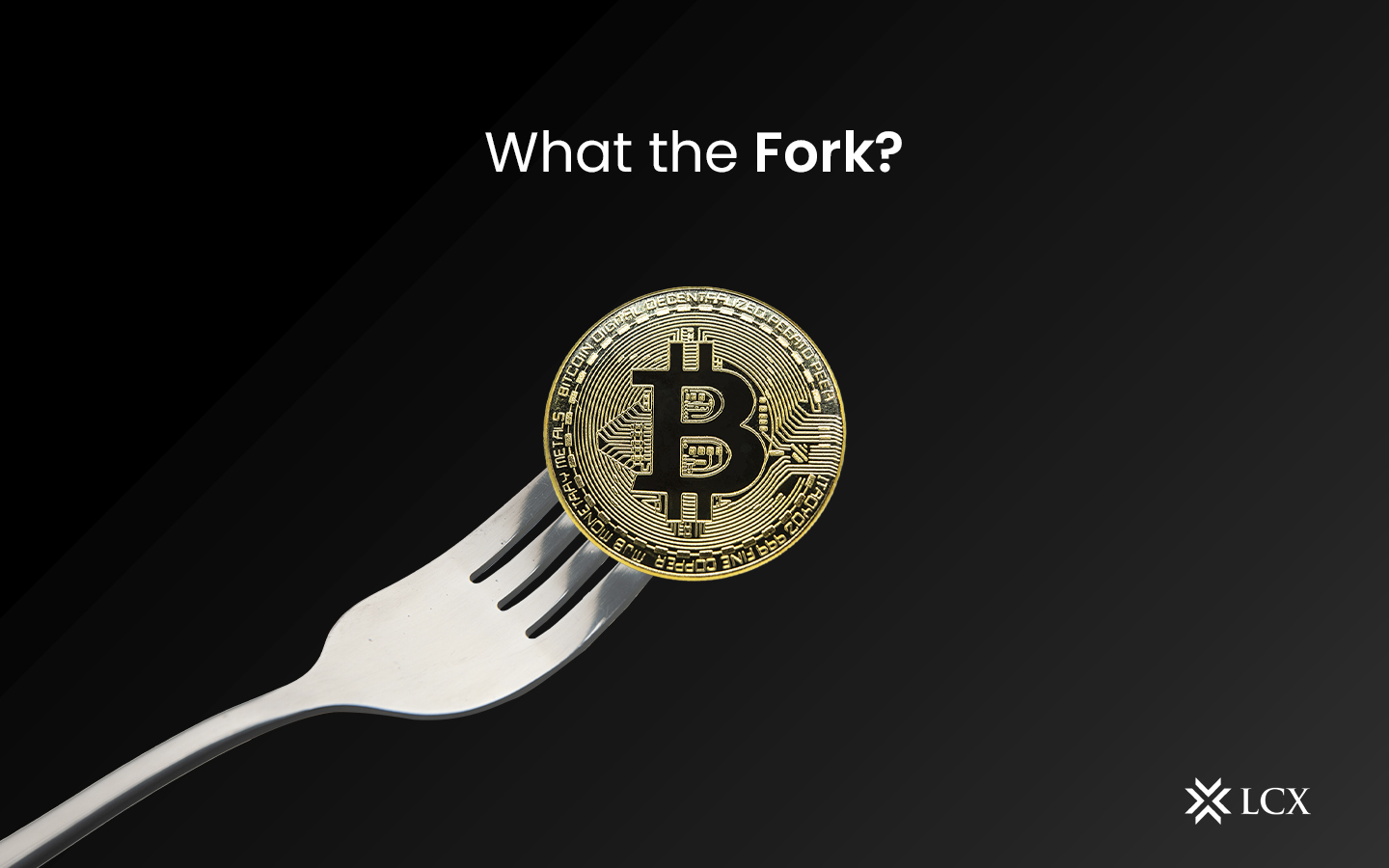
What the Fork?
door LCX Team ·
Cryptocurrencies such as Bitcoin and Ethereum are powered by blockchain technology, which is a decentralized, open software that anyone can contribute to. Blockchains are so-called because they are literally made up of blocks of data – imagine a really long train – that can be traced all the way back to the network’s first transaction. Because they are open source, they also depend on their communities to develop and maintain their underlying code.
Forks in the blockchain network are primarily a split in the blockchain network. The network is open source software, and the source code is available for free. This means that anyone can make suggestions for advancement and modify the code. The ability to experiment on open source software is a fundamental component of cryptocurrencies, and it also facilitates blockchain software updates.
A fork occurs when a community modifies the blockchain’s protocol, or basic set of rules. When this happens, the chain splits, resulting in a second blockchain that shares all of the original’s history but is heading in a different direction.
Why is this important?
Often, these digital currencies have independent developers in charge of network changes and improvements, much like how changes to internet protocols permit web browsing to improve over time. As a result, a fork may occur to improve the security of a cryptocurrency or to add new features.
How do forks work?
Forks work by bringing new features to the blockchain’s software protocol. They are frequently linked to the creation of new tokens. The most common method of developing new cryptocurrencies is starting from scratch. Or, alternatively, to ‘fork’ the established cryptocurrency blockchain.
The most popular and normal method is to create new tokens from scratch. This method entails ‘copying and pasting’ existing code, which is then altered and launched as a new token. The network must be rebuilt from the ground up, and people must be persuaded using the new cryptocurrency. This method is used by litecoin, which began as a clone of bitcoin. The founders changed the code, people were persuaded, and it has since become a famous cryptocurrency.
The other option is to fork the emerging blockchain. Rather than starting from scratch, this method modifies the existing blockchain. As the network splits, two versions of the blockchain are created. The creation of Bitcoin Cash is a good example of this. Differing views on bitcoin’s future led to the establishment of a new cryptocurrency (bitcoin cash) from the original cryptocurrency (bitcoin).
What is Hard fork and Soft fork?
Hard fork: A hard fork occurs when the code changes so drastically that the new edition is no longer backward-compatible with previous blocks. In this case, the blockchain is divided into two parts: the original blockchain and a new version that adheres to the new set of rules. This results in the creation of a completely new cryptocurrency – and is the source of many well-known coins. A cryptocurrency such as Bitcoin Cash and Bitcoin Gold arose from the original Bitcoin blockchain as a result of a hard fork.
Soft fork: Consider a soft fork to be a blockchain software upgrade. As long as all users adopt it, it becomes the new set of standards for a currency. Soft forks have been used to add new features or functions to both Bitcoin and Ethereum, typically at the programming level. The changes are backward-compatible with the pre-fork blocks because the end result is a single blockchain.
Hard forks vs. soft forks – which is better?
Fundamentally, the two types of forks mentioned above serve distinct functions. Hard forks that are contentious can divide a community, but planned ones enable the freedom to adjust the software with everyone in agreement.
Soft forks are a gentler alternative. In general, you’re more restricted in what you can do because your new changes can’t contradict the old ones. However, if your update can be designed in such a way that it remains compatible, you won’t have to worry about network fragmentation.