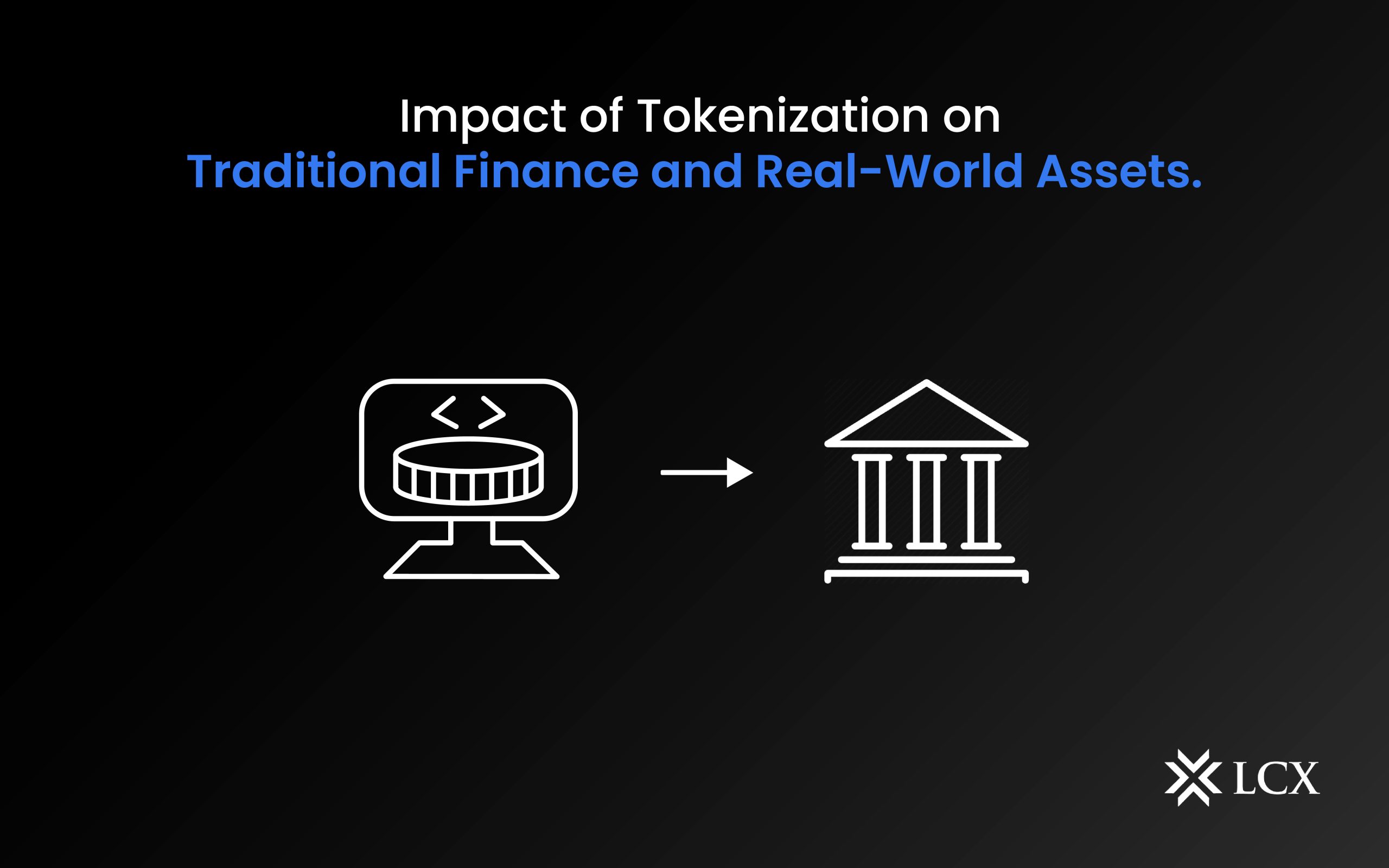
Tokenization: Traditional Finance & Real-World Assets
通过 LCX Team ·
The token economy is booming at the moment, and numerous sectors are appreciating its benefits. “Asset Tokenization” is an economic buzzword that means the process of replacing physical goods with digital tokens. Stocks of companies, works of art, properties, and other tangible assets offer solid returns for investors. However, a limitation of cash flow is a major issue. Investment in physical assets requires patience, since the corresponding transaction process can take a longer period of time.
Tokenizing physical assets ensures a wide range of benefits and encourages greater investment accessibility.
What is Tokenization?
It refers to the method of transforming non-digital assets into blockchain-based digital tokens. Such tokens can be used as a form of exchange on a decentralized marketplace because they signify possession of the underlying asset. As a result, rather than needing to invest in an entire asset, investors can buy and sell a stake in that asset.
Because it opens up previously unexplored investments to lower-net-worth investors, tokenization has the capacity to democratize the availability of assets.
Tokenizing stocks, real estate, and manufacturing assets is gaining traction in the business world. It enhances security, facilitates fundraising, and provides superior yields while minimizing the costs of transactions to a minimum, making it possible for traditionally impractical assets to join the DeFi ecosystem.
Tokenization’s Impact on Traditional Finance and Real-World Assets.
As tokenization streamlines the issuing and trading of assets, it has the capability to restructure conventional finance. The adoption of blockchain technology has the potential to eliminate middlemen and streamline operations, thereby lowering transaction costs and maximizing output.
Here are the possible changes that tokenization can bring to traditional finance and real-world assets:
Democratization of investments: Tokenization permits partial ownership of assets, making investments more accessible to a broader audience. This enables a greater number of individuals to join the financial markets and invest in assets such as real estate, art, and high-growth firms, which were formerly restricted to lending institutions.
Improved Liquidity: Tokenization has enabled new methods for trading assets, which has increased the markets’ overall liquidity. The ability to exchange digital tokens on several platforms and across borders reduces market volatility and makes it easier to buy and sell assets.
Increased Efficiency and Cost Reduction: The implementation of blockchain technology in tokenization helps optimize numerous procedures, such as clearing and settlement, resulting in increased efficiency and decreased costs. This reduces brokers’ and transaction costs, resulting in a more efficient financial environment.
Transparency: Tokenization provides a better level of transparency, as all transactions are tracked on a distributed network. It also enhances security. This makes system manipulation difficult and reduces cases of fraud. In addition, the use of cryptography algorithms protects the security and confidentiality of data.
Introduction to new financial products and services: Tokenization has enabled the development of new financial products and services, such as Security Token Offerings (STOs), Decentralized Finance (DeFi), and digital asset management systems. These new offers have broadened the existing financial environment and attracted additional participants.
The emergence of tokenizing assets may significantly alter investing in physical assets.
It can make assets that were hard to get to before more accessible by turning them into digital tokens.
Because investors can now buy a smaller stake in a property rather than the whole thing, fractional ownership of real estate has the possibility of opening new investment avenues. Since this makes it easier to buy and sell assets, it could help the market be more stable.
Challenges That Limit the Adoption of Asset Tokenization
Government Regulations: The absence of rules within nations and the worldwide nature of emerging blockchain technology make it difficult for traders and enterprises to confidently hold tokenized assets.
Policymakers, local and global authorities should cooperate to establish the legal framework for digital investment management, including all of its key factors.
Technical Barriers: Implementing tokenization involves a solid and secure operating model, including blockchain networks and smart contracts. Certain organizations may lack the technical skill or resources necessary to deploy these technologies efficiently, hence limiting the development of asset tokenization.
Compliance and Know Your Customer: Identity validation is only one component of the increasing compliance responsibility that financial institutions experience. General-purpose blockchains struggle to process the complicated logic required for compliance, and this challenge is only likely to worsen as security tokens develop and require more on-chain computation.
Although it’s not impossible to manage compliance on Ethereum—that’s what ERC-1400 was all about—it’s computationally costly to apply compliance criteria due to the necessity of smart contracts.
Unstable Code of Conduct: The absence of a code of conduct and uniform standards for producing and maintaining tokenized assets requires financial institutions to reevaluate their business architecture and exposes investors to undesirable behaviors. Utilizing formal frameworks will ensure financial institutions’ credibility.
Conclusion
Tokenization, as a result, may drastically alter conventional finance and the way we invest in physical assets. It can make the market more liquid, make it easier to issue and trade assets, and give more people the chance to invest their money.
The expected benefits of tokenization cannot be disregarded, despite the fact that there are still problems to be addressed, such as legal obstacles and technological restrictions. It is expected to grow in importance as a tool for both investors and issuers as blockchain technology advances.