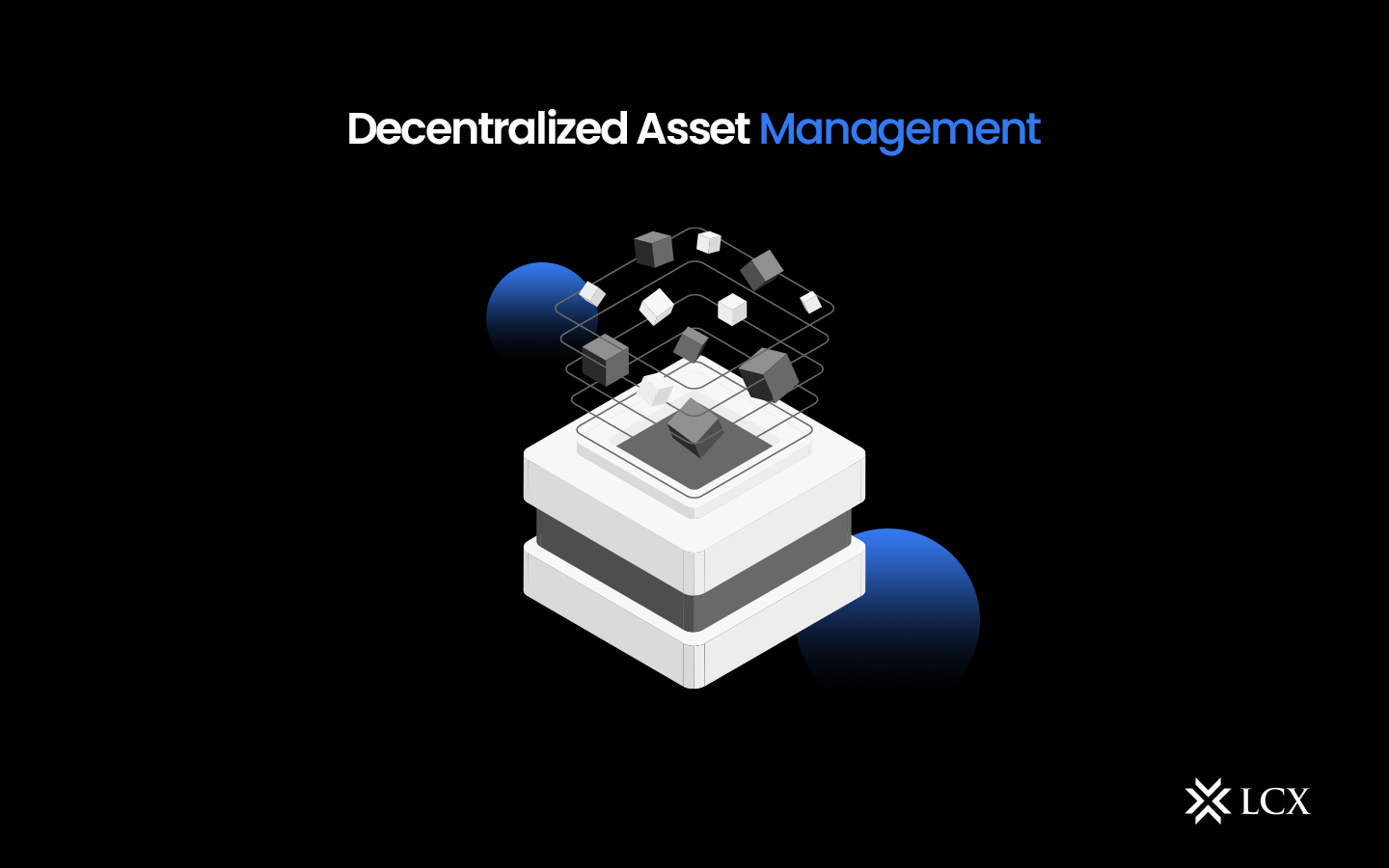
Introduction to Decentralized Asset Management
โดย LCX Team · · Updated November 13, 2023
Decentralized asset management has emerged as a disruptive force with the potential to transform traditional investment paradigms in the ever-changing financial landscape. Based on blockchain technology and decentralized finance (DeFi) protocols, this novel approach to asset management promises greater financial portfolio transparency, accessibility, and control.
Understanding Decentralized Asset Management
Decentralized asset management refers to the process of managing, trading, and investing in various financial assets through decentralized platforms that operate on blockchain technology. Unlike traditional financial institutions, which act as intermediaries in the asset management process, decentralized asset management empowers individuals to directly control and manage their investments. This is made possible by smart contracts, the self-executing code that automatically enforces the terms of an agreement, which eliminates the need for intermediaries and fosters trust within the ecosystem.
At the heart of decentralized asset management are decentralized autonomous organizations (DAOs), which are community-governed entities operating on blockchain networks. DAOs facilitate decision-making processes related to asset allocation, investment strategies, and platform governance. Participants in DAOs hold governance tokens, enabling them to influence the direction of the organization and collectively make important decisions.
Advantages of Decentralized Asset Management
Transparency and Security: Blockchain’s inherent transparency ensures that every transaction and decision made within the decentralized asset management ecosystem is recorded immutably. This transparency enhances trust among participants, as it is nearly impossible to alter or manipulate past records. Additionally, blockchain’s robust security measures protect against unauthorized access and cyberattacks.
Reduced Intermediaries: Traditional asset management often involves multiple intermediaries, leading to higher costs and longer processing times. Decentralized asset management eliminates most intermediaries, reducing fees and enabling faster transactions and settlements.
Global Accessibility: Decentralized platforms are accessible to anyone with an internet connection, leveling the playing field for individuals around the world who were previously excluded from traditional financial systems. This inclusivity has the potential to bring financial services to the unbanked and underbanked populations.
Flexibility and Customization: Decentralized asset management platforms provide users with the flexibility to create and tailor investment strategies to their individual preferences and risk tolerances. Smart contracts automate the execution of these strategies, eliminating the need for constant monitoring.
Liquidity: DeFi protocols often facilitate the creation of liquidity pools, enabling users to easily trade and swap assets. This liquidity enhances market efficiency and reduces the impact of large trades on asset prices.
Challenges and Considerations
While decentralized asset management presents numerous advantages, it also faces several challenges that must be addressed for its widespread adoption:
Regulatory Uncertainty: The regulatory landscape for decentralized finance is still evolving, with different jurisdictions taking varying approaches. Clarity is needed to ensure compliance and investor protection without stifling innovation.
Smart Contract Risk: While smart contracts are designed to be tamper-proof, vulnerabilities can still be exploited by malicious actors. The industry must prioritize security audits and code reviews to mitigate potential risks.
User Experience: The user interfaces of many DeFi platforms can be complex and intimidating for newcomers. Improving the user experience and making the technology more user-friendly will be crucial for mainstream adoption.
Volatility: Cryptocurrency markets are known for their high volatility. While this can lead to potential gains, it also introduces significant risks that investors must consider when managing their assets.
Scalability: The scalability of blockchain networks is a key concern, as high transaction volumes can lead to congestion and increased fees. The industry must continue to work on solutions to improve network scalability.
The Future Landscape of Finance
Decentralized asset management is a pivotal component of the broader DeFi movement that is reshaping the financial landscape. As technology matures and overcomes its challenges, it has the potential to democratize finance, making it more accessible, efficient, and inclusive. Traditional financial institutions are already taking note of the disruptive potential of decentralized asset management and are exploring ways to integrate these innovations into their offerings.
In conclusion, decentralized asset management represents a paradigm shift in the way individuals manage and invest their assets. By leveraging blockchain technology, smart contracts, and DAOs, this approach empowers users with greater control, transparency, and access to the global financial markets. While challenges persist, the potential benefits are immense, paving the way for a more inclusive and decentralized financial future. As the industry continues to evolve, it is crucial for participants to remain informed, engaged, and open to the transformative possibilities that decentralized asset management can bring to the world of finance.