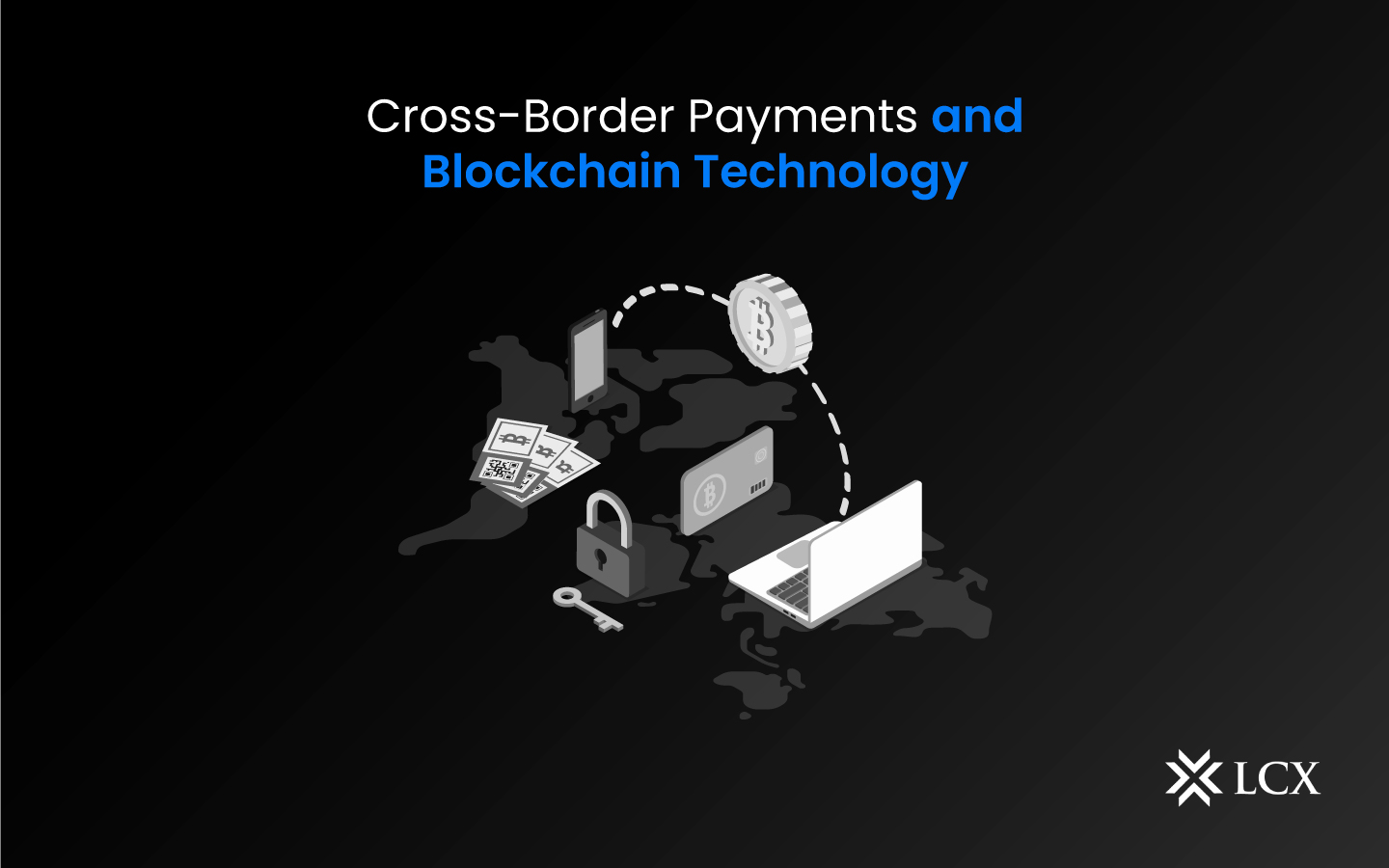
Cross-Border Payments and Blockchain Technology
av LCX Team ·
Cross-border payments have traditionally been a time-consuming and expensive process, involving multiple intermediaries and high transaction fees. However, with the advent of blockchain technology, there has been a shift towards a more streamlined and cost-effective way of making these payments. Distributed ledger technology, or blockchain technology, is a game-changer in cross-border money transfers. It accelerates the payment process by employing encryption technology. In this blog post, we will explore how blockchain technology is revolutionizing cross-border payments.
What Are Blockchain Cross-Border Payments?
With the emergence of blockchain technology and decentralized finance (DeFi), there is a rising demand for cross-border payments in the Web3 ecosystem as more individuals and organizations seek to transact with digital assets. Blockchain cross-border payments are transactions between parties from various countries that are facilitated by blockchain technology. Historically, banking and financial institutions facilitated cross-border payments, which frequently involved a complex network of intermediaries, such as correspondent banks and clearing houses. This can lead to high transaction fees, longer processing periods, and an opaque payment process.
In contrast, blockchain-based cross-border payments seek to eliminate intermediaries, reduce transaction costs, and increase transaction speed and security. Today, blockchain-based cross-border payments facilitate faster payment solutions for business-to-business and person-to-person blockchain transactions. They are proving to be a game-changing development in international money transfers. This makes international payments and settlements a prominent use case for blockchain technology.
How Do Cross-Border Payments Work When Using Blockchain Technology?
Using the blockchain’s decentralized and secure nature, blockchain-based cross-border payments facilitate transactions between participants in different countries using different currencies. The innovative architecture of blockchain- and ledger-based technologies enables the advantages of blockchain-based cross-border payments over conventional transnational payments and settlements.
Traditional international bank transfers between a sender and a recipient are connected by a complex banking network and other financial services institutions, complicating and slowing the process. The Society for Worldwide Interbank Financial Telecommunications (SWIFT) is a messaging network used by traditional banks and financial institutions around the globe to securely and swiftly exchange information regarding financial transactions. However, SWIFT confronts its own challenges, including high costs, limited access, and centralized control. Smart contracts, on the other hand, autonomously enforce blockchain cross-border payment transactions based on predetermined rules. This elimination of intermediaries results in transparent, instantaneous transactions.

What Are the Advantages of Blockchain-Operated Cross-Border Payments?
Blockchain-operated cross-border payments offer several advantages over traditional financial methods, and a few of them are as follows:
- Faster Settlements: Blockchain technology enables near-instant cross-border payments, eliminating the need for intermediaries such as banks or payment processors. This means that payments can be processed within minutes rather than days, and funds can be transferred directly between the sender and the recipient.
- Lower Fees: The cost of making these payments can be significant, with traditional payment methods often charging high fees. However, by using blockchain technology, the fees for these payments can be significantly reduced. This is because blockchain transactions do not require intermediaries, which can reduce the costs involved in processing payments.
- Increased Transparency: Blockchain technology provides a transparent and tamper-proof record of all transactions. This means that both the sender and the recipient can track the progress of the payment and verify its authenticity. This transparency helps to reduce the risk of fraud and increases trust in the payment process.
- Global Reach: Blockchain technology is a decentralized system, which means that it is not tied to any specific country or jurisdiction. This makes it an ideal solution for these payments, as it enables payments to be made globally without the need for complex foreign exchange transactions.
- Improved Security: Blockchain technology uses advanced cryptographic techniques to secure transactions. This makes it virtually impossible for anyone to tamper with the transaction or steal funds. This enhanced security reduces the risk of fraud and increases trust in the payment process.
Are Blockchain Cross-Border Payments Safe?
Cross-border blockchain payments are based on the security-enhancing principles of cryptography, distributed ledger technology, and decentralization. Every network participant has a copy of the distributed ledger, and each transaction is validated by a consensus mechanism before being added to the distributed ledger. This makes it extremely difficult for a single party to alter the data or transaction records.
In addition to these technological principles, the majority of blockchain-based payment systems encrypt user information and private keys, which are required to access and transfer funds. This adds an additional layer of security, making it harder for hackers and other malicious actors to access sensitive data.
As with any payment system, blockchain-based payment systems are not immune to all risks, and users should take the necessary precautions to safeguard their assets, such as using secure passwords, two-factor, multi-signature authentication, and securing their private keys.
Conclusion
Blockchain technology offers a promising alternative to traditional payment systems for cross-border payments. By eliminating intermediaries, blockchain-based payment systems can potentially reduce transaction costs, increase efficiency, and improve security. This has significant implications for businesses and consumers alike, offering faster, cheaper, and more secure transactions. As blockchain technology continues to evolve, it is likely to play an increasingly important role in the future of these payments.